It’s been a long time since I stopped being a Firefox fan. Back when it was the only full featured open source browser, it was awesome. But then the development slowed down, the browser started eating memory like a starving Godzilla, and daily application crashes became a norm. On top of it, Google Chrome came out. It was faster, cleaner, and much more stable. It lacked the functionality bits and pieces, but all that was nothing compared to the speed, polish, and stability. And as years went by, Firefox, it seemed, didn’t even try to catch up.
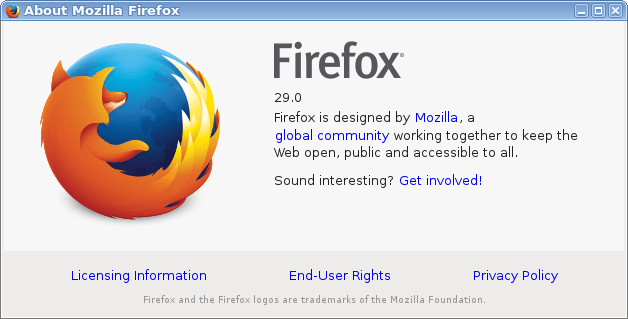
Today, my Fedora updates pulled in brand new and shiny Firefox 29.0 and the first time in years I am actually liking it. The first thing that stands out immediately is the much cleaned up user interface. The tabs look slick and main menu is moved into a single icon to the upper right corner, much like Google Chrome has it. The menu is also reworked into a customizable area of icons, rather than nested text items. The second important addition is the browser synchronization. Once you create an account and enable the sync, your tabs, passwords, history, and forms will automatically synchronize between different machines. That’s a very handy feature for those who have different home and office computers or some other scenario with multiple devices.
There is still a long road for the Firefox browser to catch up with Google Chrome though. Two things that come to mind are the performance and the ability to install/uninstall extensions without restarting the browser. But I sure appreciate all the hard work that went into this version. After all, open competition pushes all products and the end user ultimately benefits. It’s been a long while since there was a feeling of competition in the browser marketplace. It’s good to catch a scent of that again.