HTML Canvas Tutorial

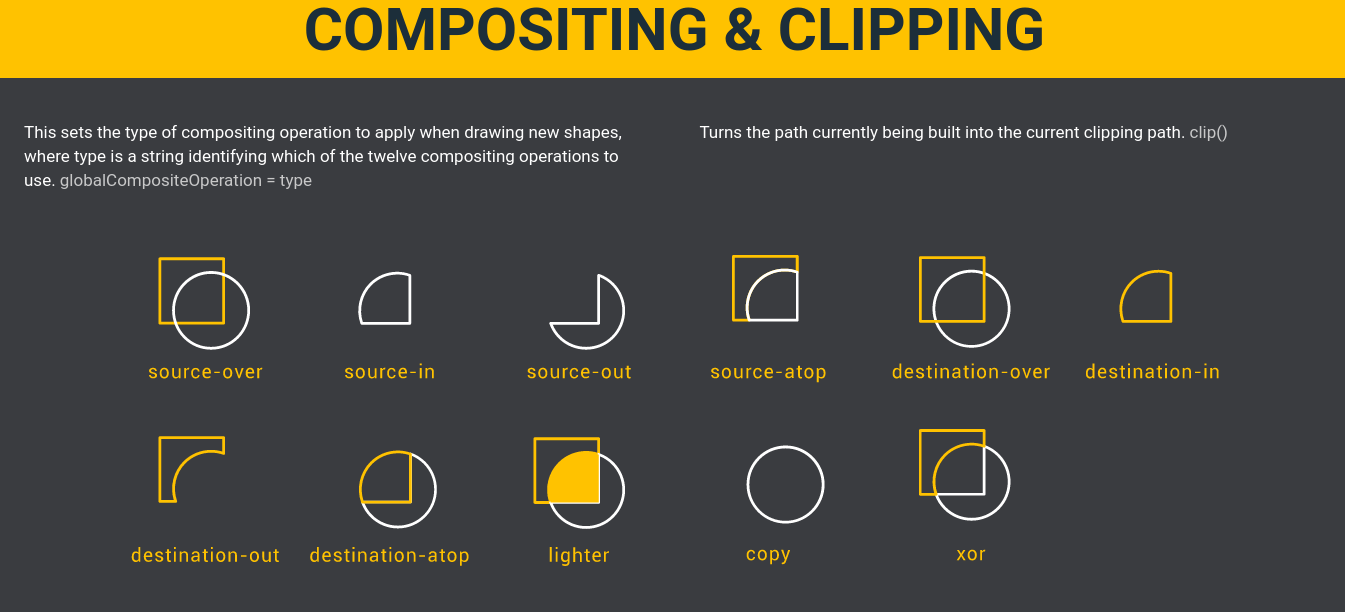
Skilled.co put together this HTML Canvas Tutorial, which covers the HTML 5 <canvas> functionality, that allows web developers to draw all sorts of graphics on the fly, using JavaScript.  The tutorial is available for download in PNG and PDF formats, as well as on the webpage, and it covers the following:

  • Shapes
  • Styles and color
  • Text
  • Images
  • Transformations
  • Compositing and clipping
  • Animation
  • Pixel manipulation
  • Hit regions and accessibility

It also provides a few useful tips, inspiration, and links to other resources.

What’s the best framework for building mobile apps?

It’s been a while (a few years actually) since I looked at building a mobile application.  I don’t have the need to build one now, but I like keeping an eye on what’s going on that domain.

Even back when I was involved with mobile applications, the better approach was to use a framework, rather than building the app from scratch.  The frameworks that existed at the time would help with building a cross-platform (Android, iOS, Windows Mobile, etc) application, and have a better integration with the mobile’s hardware and features (touchscreen, networking, vibration, camera, etc.)

As with many other cutting edge technologies, things move very fast and things get outdated pretty quickly.  So it was interesting to read – What’s the best framework for building mobile apps? – which covers today’s options.  Some of the solutions survived the last few years, some didn’t, and there are a few new ones.  The frameworks covered in the article are:

The article is a good quick overview of what’s out there and why to pick one over the other.

Immutable Infrastructure with AWS and Ansible

Immutable infrastructure is a very powerful concept that brings stability, efficiency, and fidelity to your applications through automation and the use of successful patterns from programming.  The general idea is that you never make changes to running infrastructure.  Instead, you ensure that all infrastructure is created through automation, and to make a change, you simply create a new version of the infrastructure, and destroy the old one.

“Immutable Infrastructure with AWS and Ansible” is a, so far, three part article series (part 1, part 2, part 3), that shows how to use Ansible to achieve an immutable infrastructure on the Amazon Web Services cloud solution.

It covers everything starting from the basic setup of the workstation to execute Ansible playbooks and all the way to AWS security (users, roles, security groups), deployment of resources, and auto-scaling.

10 things to avoid in Docker containers

10 things to avoid in Docker containers provides a handy reminder of what NOT to do when building Docker containers.  Read the full article for details and explanations.  For a brief summary, here are the 10 things:

  1. Don’t store data in containers
  2. Don’t ship your application in two pieces
  3. Don’t create large images
  4. Don’t use a single layer image
  5. Don’t create images from running containers
  6. Don’t use only the “latest” tag
  7. Don’t run more than one process in a single container
  8. Don’t store credentials in the image. Use environment variables
  9. Don’t run processes as a root user
  10. Don’t rely on IP addresses

How to change your Twitter username

I’m not considering a change of my Twitter account, as I’m using my surname all over the place and the only person it ever conflicts with is my brother.  But I’ve heard of people trying to rename their accounts or re-brand their activity on Twitter, so I think is article – How to change your Twitter username – is useful.

Here’s a synopsis:

  • create a new Twitter account with a @JunkName handle you don’t care about
  • change your @OldName account to @NewName, keeping your followers and tweet history intact (releasing your @OldName into the wild)
  • use the new Twitter account you made to quickly grab @OldName before anyone else has a chance to take it

One thing to note: Because of the way Twitter handles conversations, changing your username won’t retroactively change @mentions directed toward you from other people. This means that people you’ve conversed with will seemingly be talking to a ghost at @OldName instead of you at @NewName. Considering the “in-the-now” nature of Twitter this isn’t really a showstopper, just a mild inconvenience that’ll lessen over time.