Vim 8.0 Released!

The team behind the greatest text editor of all times has release the new major version – Vim 8.0.  It’s the first major release in 10 years!  Brief overview of the changes:

  • Asynchronous I/O support, channels, JSON
  • Jobs
  • Timers
  • Partials, Lambdas and Closures
  • Packages
  • New style testing
  • Viminfo merged by timestamp
  • GTK+ 3 support
  • MS-Windows DirectX support

For a more complete list and details, have a look here.

The TL;DR summary: Vim provides a lot more power now to plugin developers, so we’ll be seeing a boost in both new functionality and old ways getting better.

Here is a mandatory Slashdot discussion with your usual Vim vs. Emacs flame.

P.S.: Emacs has recently released a major update too …

Top 13 Amazon Virtual Private Cloud (VPC) Best Practices

Cloud Academy Blog goes over top 13 Amazon VPC best practices – particularly good for those just starting up with the platform.  The article discusses the following:

  1. Choosing the Proper VPC Configuration for Your Organization’s Needs
  2. Choosing a CIDR Block for Your VPC Implementation
  3. Isolating Your VPC Environments
  4. Securing Your Amazon VPC Implementation
  5. Creating Your Disaster Recovery Plan
  6. Traffic Control and Security
  7. Keep your Data Close
  8. VPC Peering
  9. EIP – Just In Case
  10. NAT Instances
  11. Determining the NAT Instance Type
  12. IAM for Your Amazon VPC Infrastructure
  13. ELB on Amazon VPC

Overall, it’s a very handy quick list.

GitHub Improvements

GitHub has recently announced a whole lot of improvements to their service and functionality.  For me personally the following bits were super exiciting.

Improvements to the code review

reviews popover

Approve or require changes

You’re no longer left on your own to figure out if a comment was important. Or if that emoji means “Go ahead, looks great!” Or “Please no, this is likely going to bring the site down!”

With Reviews, you can leave your comments as suggestions, approve the changes, or request additional changes—on any pull request.

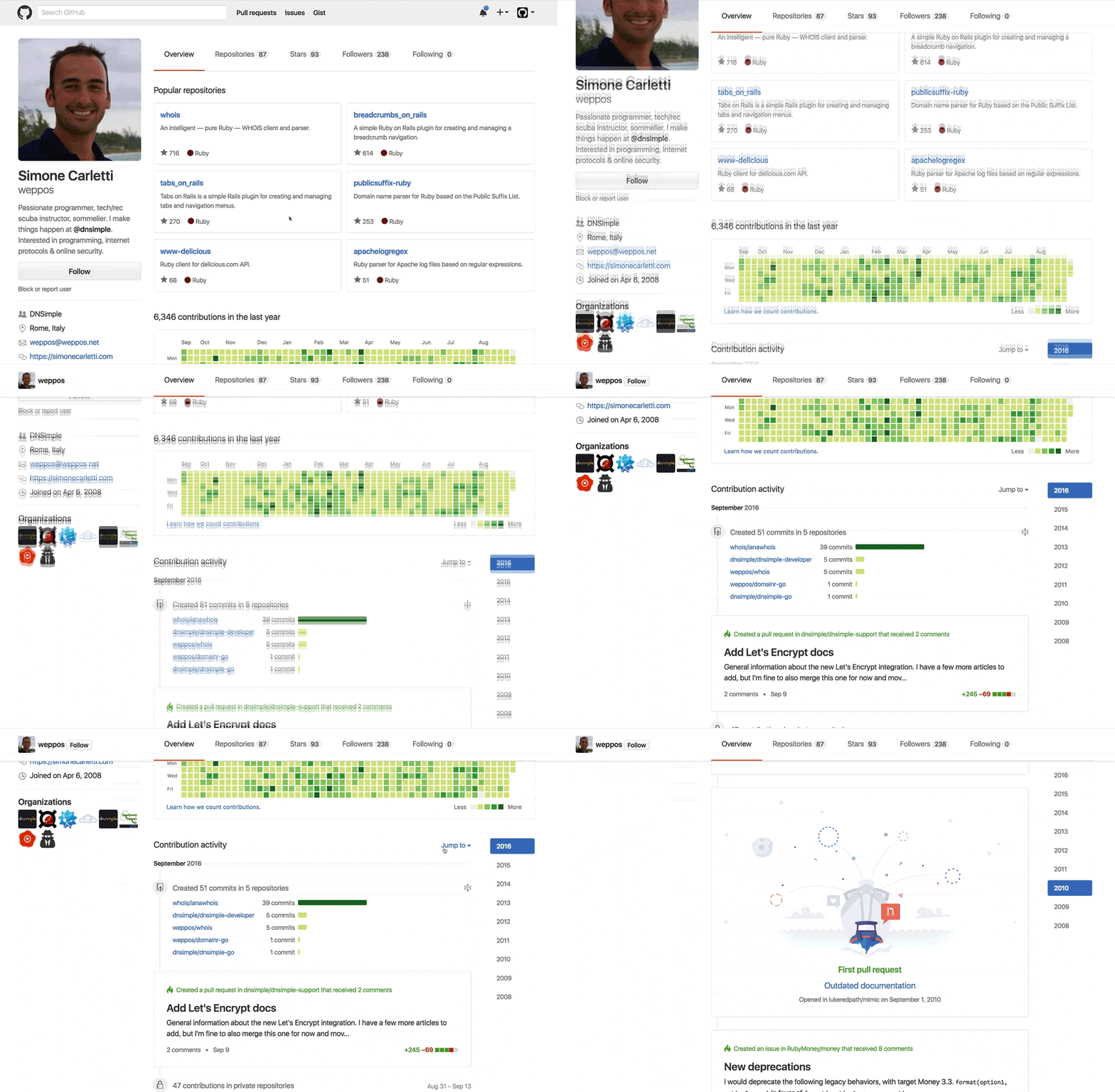
Improvements to the GitHub Profile page

github profiles

See what’s behind your green squares

GitHub profiles show your life and career as a developer. We’ve taken the contribution graph to new heights with your GitHub timeline—a snapshot of your most important triumphs and contributions.

But there is more – projects, notes, comment drafts, etc.  Check the full announcement.

BitBucket Pipelines and Docker for PHP Developers

I’ve been meaning to look into Docker for a long while now.  But, as always, time is the issue.  In the last couple of days though I’ve been integrating BitBucket Pipelines into our workflow.  BitBucket Pipelines is a continuous integration solution, which runs your project tests in a Docker container.  So, naturally, I had to get a better idea of how the whole thing works.

Docker for PHP Developers” article was super useful.  Even though it wasn’t immediately applicable to BitBucket Pipelines, as they don’t currently support multiple containers – everything has to run within a single container.

The default BitBucket Pipelines configuration suggests the phpunit/phpunit image.  If you want to run PHPUnit tests only, that works fine.  But if you want to have a full blown Nginx and MySQL setup for extra bits (UI tests, integration tests, etc), then you might find smartapps/bitbucket-pipelines-php-mysql image much more useful.  Here’s the full bitbucket-pipelines.yml file that I’ve ended up with.