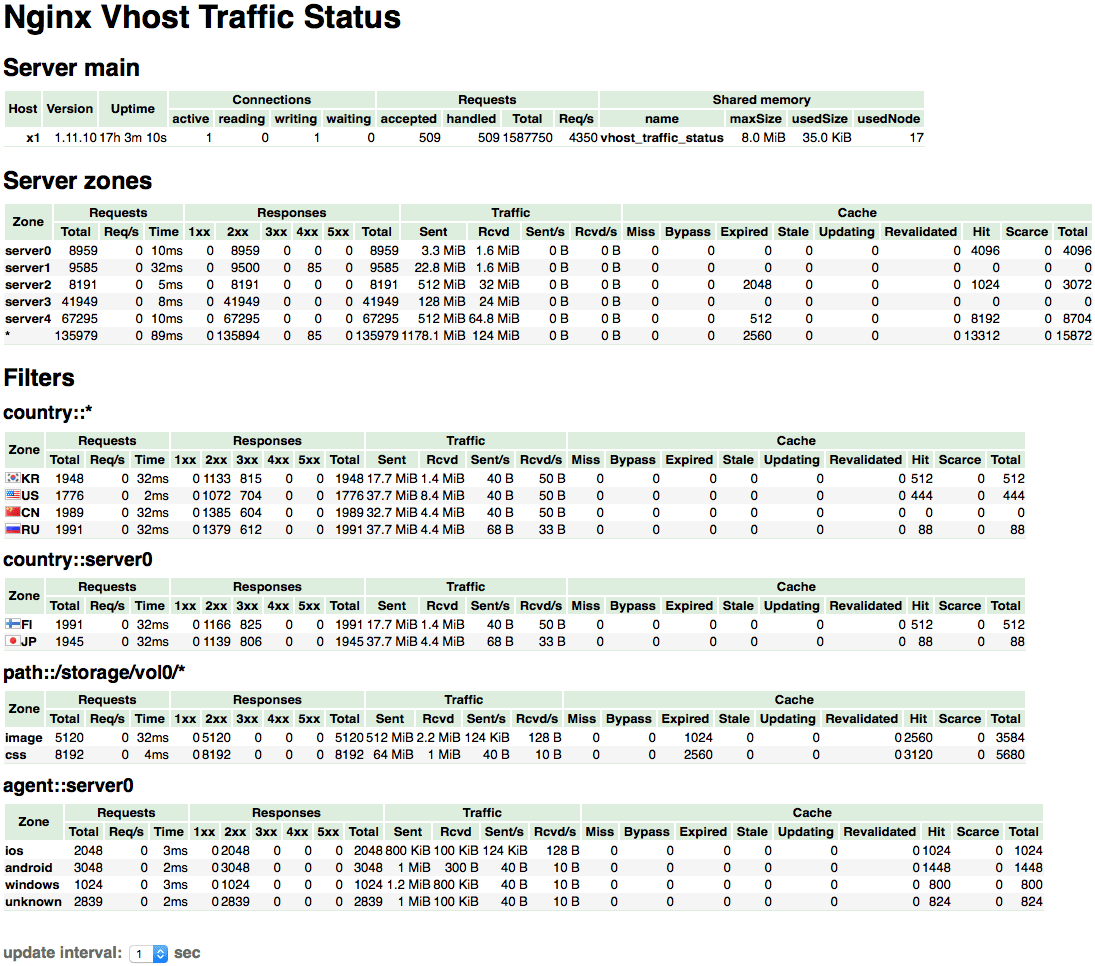
nginx-module-vts is a handy Nginx module for those who run complex Nginx configurations, with multiple servers, virtual hosts, caches, etc. Here’s an example partial screenshot of the output.
All posts across the whole website belong to this category. They might also belong to some other categories as well, but this one holds all of them. Hence the descriptive name – All.
nginx-module-vts is a handy Nginx module for those who run complex Nginx configurations, with multiple servers, virtual hosts, caches, etc. Here’s an example partial screenshot of the output.
GitHub blog recently announced a couple of interesting new features.
Firstly, Security Alerts. For now it only supports Ruby and JavaScript, but hopefully other languages are coming soon (PHP/Composer please!). Security Alerts will notify repository owners if there are any known security issues in any of the packages that the repository is using. Similar, I guess, to who SensioLabs Security Check works, but integrated with your GitHub.

Secondly, Team Discussions. This is yet another way place for the team to communicate. There are Issues and Pull Requests already. But those are more specific and more focused. For anything that doesn’t have a single issue, or doesn’t have a PR yet, a Team Discussion might be a better place.
ninja-mutex is a simple to use mutex implementation for php. It supports different adapters (flock, memcache, mysql, redis, …) so you can setup it as you wish. All adapters (if set up properly) can be used in multi server environment – in other words lock is shared between web servers.
Slashdot shares the story:
Linux rules supercomputing. This day has been coming since 1998, when Linux first appeared on the TOP500 Supercomputer list. Today, it finally happened: All 500 of the world’s fastest supercomputers are running Linux. The last two non-Linux systems, a pair of Chinese IBM POWER computers running AIX, dropped off the November 2017 TOP500 Supercomputer list. When the first TOP500 supercomputer list was compiled in June 1993, Linux was barely more than a toy. It hadn’t even adopted Tux as its mascot yet. It didn’t take long for Linux to start its march on supercomputing.
From when it first appeared on the TOP500 in 1998, Linux was on its way to the top. Before Linux took the lead, Unix was supercomputing’s top operating system. Since 2003, the TOP500 was on its way to Linux domination. By 2004, Linux had taken the lead for good. This happened for two reasons: First, since most of the world’s top supercomputers are research machines built for specialized tasks, each machine is a standalone project with unique characteristics and optimization requirements. To save costs, no one wants to develop a custom operating system for each of these systems. With Linux, however, research teams can easily modify and optimize Linux’s open-source code to their one-off designs.
 Fedora 27, the latest and greatest version, has been released. As always, a lot of work went into putting it all together. But for personally, the new releases has stopped being exciting a long time ago. My desktop needs have been satisfied for years. All I need is MATE Desktop Environment (with i3 window manager), a browser, terminal emulator and Vim. That’s pretty much it. And it has been there forever.
So, is there anything interesting in this new version at all? Release Notes are rather thin, but let’s have a look.
If you want even more details on what has been done, why and how, have a look at the Fedora 27 changes page.
To me it looks like there is some internal restructuring and reorganization going on, with release process changes (no more Alpha releases), a lot of effort on modularity, and so on.
Hopefully, the next one will be a bit more exciting.